

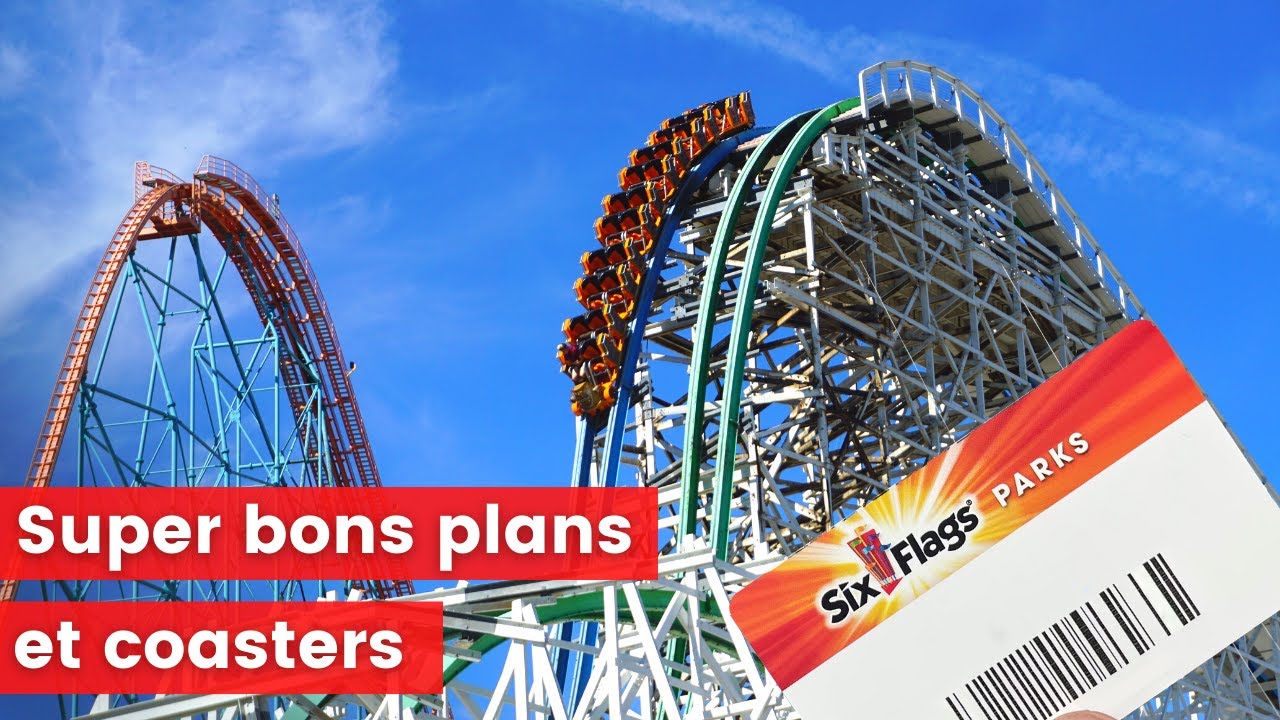
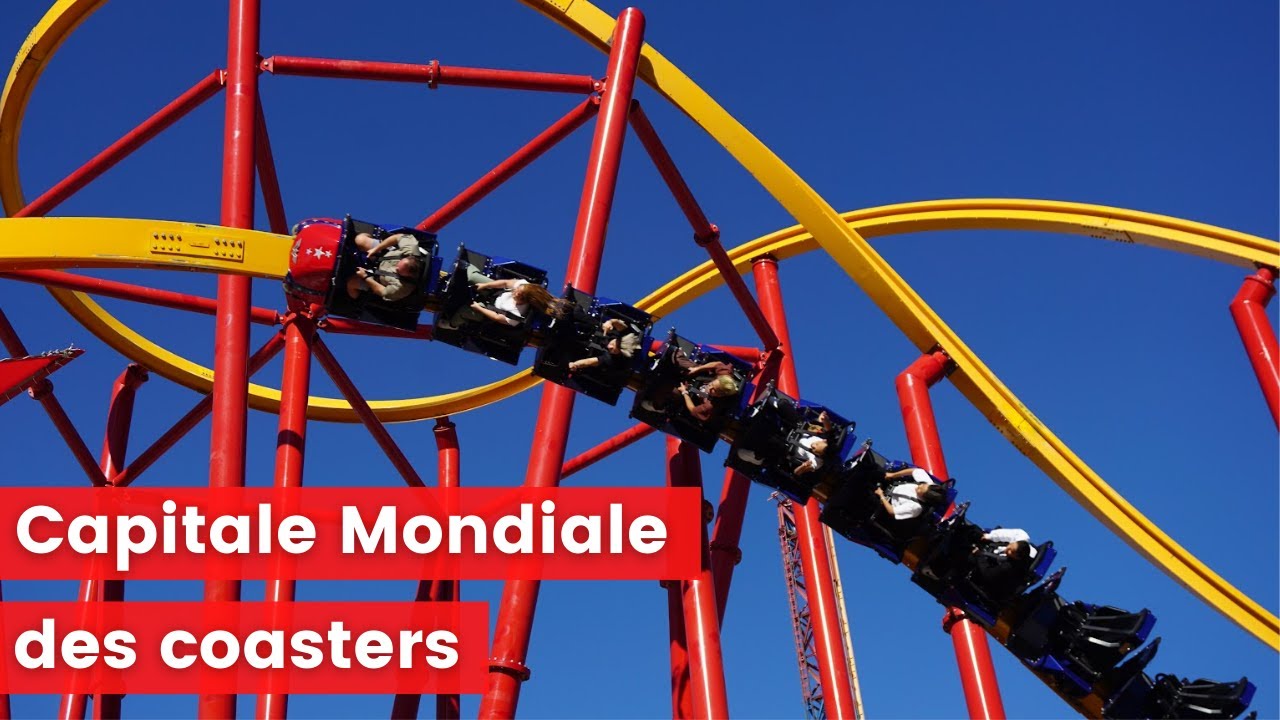
Six Flags Magic Mountain, the undisputed thrill capital of the world located in Valencia, California, is once again preparing to push the boundaries of roller coaster engineering. With twenty coasters already under its belt, the park has just unveiled its major project slated for Spring 2027: Thrill Glider. Billed as an absolute world first, this unprecedented attraction—developed in close partnership with Dutch manufacturer Vekoma—marks a major technical turning point for the amusement park industry. Blending the freedom of a suspended coaster, the ergonomic immersion of a motorcycle-style straddled seating position, and the soaring sensation characteristic of flying coasters, Thrill Glider delivers a dynamic, interactive experience custom-designed to hug the rugged terrain of the California hillside.
Beyond being a headline-grabbing announcement for the American West Coast, this project resonates deeply on the international stage, particularly in Europe. The coaster's underlying engineering shares its direct origins with major future installations planned in Europe, building a fascinating bridge between Six Flags' high-thrill philosophy and the deeply immersive storytelling of parks like Efteling. From technological reveals and design secrets to a detailed layout breakdown and early enthusiast feedback, here is an in-depth look at what promises to be one of the most intriguing prototypes of the decade.
A World First: Hovercycle Technology and the Efteling Connection
To understand the origins of Thrill Glider, one must look at the core concept created by the engineers at Vekoma Rides Manufacturing. Marketed as a Suspended Thrillglider or Inverted Thrill Coaster, this innovative model completely reimagines the interaction between rider, vehicle, and track. Unlike traditional flying roller coasters (such as B&M's iconic Tatsu, located in the same park), where riders load sitting down before being tilted face-down beneath the track, Thrill Glider features direct boarding onto a hovercycle vehicle. Riders mount the vehicle straddled, leaning forward head-first while suspended beneath the track structure.
This hybrid riding position delivers an exceptionally smooth sensation of flight. Body support is provided by an ergonomic chest harness that fits snugly against the chest and shoulders, leaving the lower body completely free to move and heightening the feeling of total exposure. Furthermore, each vehicle features on-board audio synchronized with the ride trajectory, as well as dynamic LED lighting integrated directly into the hovercycle chassis, creating a striking visual spectacle during high-speed passes and semi-enclosed sections.
The attraction's storyline centers on the fictional company QuantumPulse Propulsion Systems, a cutting-edge research lab specializing in harvesting stellar energy. Guests are invited to tour the firm's showcase facility, dubbed The Futurist Pavilion, where the themed queue features holographic displays, plasma propulsion engines, and interactive projections. As the story goes, guests are testing the latest hovercycle prototypes powered by the mysterious particle PSR B417, an experimental fuel source delivering incredible acceleration.
The strategic and technical link connecting this California debut to Europe is especially compelling. Industry analysts and coaster enthusiasts immediately connected Thrill Glider to Vekoma's top-secret project heading to the Dutch theme park Efteling. Scheduled for a 2029 debut under the code name Missie Luminar in the Reizenrijk realm, Efteling's upcoming coaster will rely on the exact same hardware platform and suspended, prone-position vehicle technology. However, the philosophy behind the two installations differs dramatically:
- Six Flags Magic Mountain: Focuses on a long, sprawling, fast-paced layout that takes full advantage of the natural slope of the rocky California terrain, prioritizing raw speed and open-air inversions.
- Efteling: Leverages this exact technology to serve an intricate, poetic storyline, blending extensive indoor dark ride sections with complex environmental special effects to immerse the entire family in a fairytale adventure.
By debuting this technology in Spring 2027, Six Flags claims the world premiere for the model, offering the global coaster community an exciting preview of Vekoma's next-generation ride capabilities.
Technical Specifications and Layout Breakdown
Beyond its groundbreaking visuals, Thrill Glider boasts a carefully balanced spec sheet designed to deliver the ideal mix of high thrills and broad family accessibility. Here are the key technical details confirmed by the park and manufacturer:
- Track Length: 3,380 feet (1,030 meters) of steel track.
- Maximum Height: 107 feet (32.6 meters) above ground level at its highest point.
- Top Speed: 50 mph (80.5 km/h), reached during the second launch sequence.
- Propulsion System: Two Linear Synchronous Motor (LSM) launch zones.
- Inversions: 5 total inversion elements.
- Airtime Moments: 12 hills and transitions engineered for negative and zero-G forces.
- Trains: 2 articulated trains carrying 16 riders each (arranged in 8 rows of 2).
- Ride Duration: Approximately 1 minute and 24 seconds of continuous motion.
- Height Requirement: 48 inches (1.22 meters), making it accessible for kids around 6 to 8 years old.
The experience kicks off right out of the station with immediate action. Rather than using a traditional lift hill, Thrill Glider launches riders right away via a slightly inclined LSM launch zone. The train accelerates smoothly yet punchily, shooting riders straight toward the crest of the hill.
Just past the crest, the coaster dives into its first major element: a sweeping Wing-over plunging toward the valley, offering panoramic views of the park while rolling riders onto their backs before snapping them back upright. The layout then navigates a series of low-to-the-ground, heavily banked S-curves, hugging the natural rock formations and terrain to amplify the perception of speed as the ground rushes beneath the riders' feet.
The train then enters the second LSM launch zone at the lowest point of the valley. This boost propels the vehicle to its top speed of 50 mph into a textbook Zero-G Roll. Floating weightless while upside down, riders experience the signature glass-smooth tracking Vekoma is known for. What follows is an Overbanked Stall Turn—where the train briefly pauses sideways at a steep vertical angle—followed by a classic Barrel Roll and a thrilling Upward Barrel Roll. Before returning to the station, the track packs in no fewer than twelve airtime moments, featuring crisp yet comfortable directional shifts that lift riders effortlessly from their seats.
Project History, Leaks, and Construction Progress
The official reveal of Thrill Glider on September 10, 2026, was the culmination of months of speculation closely tracked by industry insiders and coaster fans. Here is a timeline of how the once secret project unfolded.
It all began in November 2025, when eagle-eyed parkgoers spotted unusual activity in the staging area behind Six Flags Magic Mountain. Flatbed trucks delivered dark gray and deep blue steel track segments and support columns bearing Vekoma Rides Manufacturing tags. At the time, speculation ran wild: was this meant for another park in the chain, or an unannounced addition for Magic Mountain?
By January and February 2026, any doubts about the location vanished. The park began clearing land by demolishing the aging, underutilized Golden Bear Theatre, located in the heart of the park between the launched coaster Full Throttle and the LEX LUTHOR: Drop of Doom drop tower. Clearing this site unlocked a prime plot of land stretching from the main midways up the steep terrain of the central hill.
Throughout Spring and Summer 2026, construction shifted into high gear with extensive earthwork and foundation drilling directly into the hillside rock. The first steel supports went up in May, revealing the distinct profile of Vekoma's modern suspended track. Around the same time, patents surfaced online showing Vekoma's designs for a straddled flying vehicle restraint system, confirming the ride's innovative seating format.
Finally, on September 10, 2026, during Six Flags' annual new attraction announcement wave, park officials formally unveiled the name, concept art, and full 3D layout rendering. The artwork highlighted thoughtful landscape integration, futuristic station architecture, and plans to re-vegetate the surrounding hillside to create a lush, dynamic backdrop.

Early Reactions and Enthusiast Analysis
Following the official announcement, online communities and social media—especially the r/rollercoasters subreddit—were quick to dissect every detail. While enthusiasm for the attraction is high, experts and fans have raised a few interesting points of discussion.
On the positive side, praise for choosing Vekoma has been overwhelming. Over the past several years, the Dutch manufacturer has experienced a major renaissance, earning acclaim for ultra-smooth track manufacturing and masterful layout design (seen on rides like FLUG DER DÄMONEN, LECH COASTER, and Phantasialand's F.L.Y.). The decision to build terrain-following track rather than dropping a massive steel superstructure onto a flat concrete slab was also widely praised, as it promises high-speed proximity interaction with the terrain.
Accessibility is another major win. Set at a 48-inch height requirement, Six Flags fills a crucial gap in its ride lineup. Long criticized for focusing almost exclusively on extreme, high-threshold machines requiring a 54-inch height limit, Magic Mountain gets a standout "bridge" attraction. Thrill Glider will allow younger thrill-seekers and families to experience a full-scale launched coaster with five inversions in complete comfort.
However, enthusiasts have noted a few potential concerns:
- Hourly Capacity and Throughput: Capacity is the main area of concern. Running just two 16-rider trains (meaning only 32 guests are on the track circuit at a time), theoretical capacity will likely max out around 750 to 800 riders per hour, even with efficient operations. At a park as heavily attended as Six Flags Magic Mountain, long wait times could be an issue following its 2027 opening.
- Landscaping and Theming Execution: While the renderings display a green, tree-lined hillside anchored by sleek futuristic structures, fans point out Southern California's arid climate and Six Flags' history of scaling back thematic elements over time. The community remains cautiously optimistic about the final look of "The Futurist Pavilion."
- Ride Name: Finally, the name Thrill Glider received some lighthearted criticism for being somewhat plain or generic, sounding more like Vekoma's internal catalog model name than a custom marquee attraction name for a major theme park.
Ultimately, even with these operational questions, Thrill Glider stands out as one of the most exciting and ambitious coaster projects set for 2027. Combining Vekoma's top-tier engineering with a fresh ride posture and a custom terrain layout, Six Flags Magic Mountain once again reinforces its status as a premier global destination for roller coaster fans.





Comments
Be the first to comment!
Add a comment